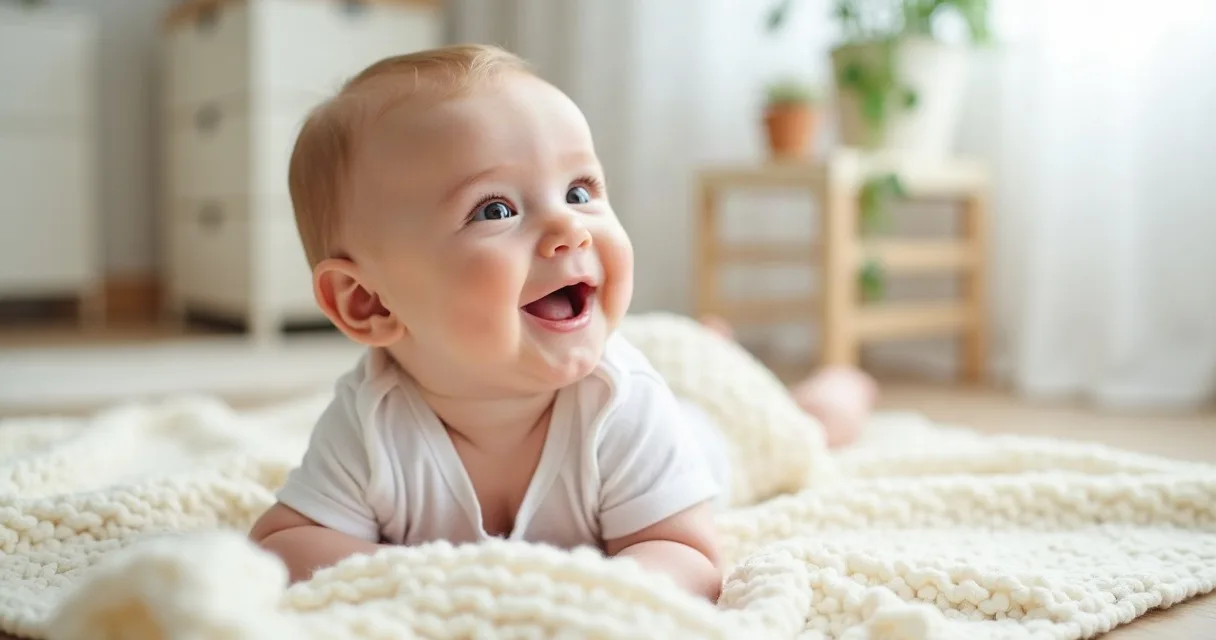

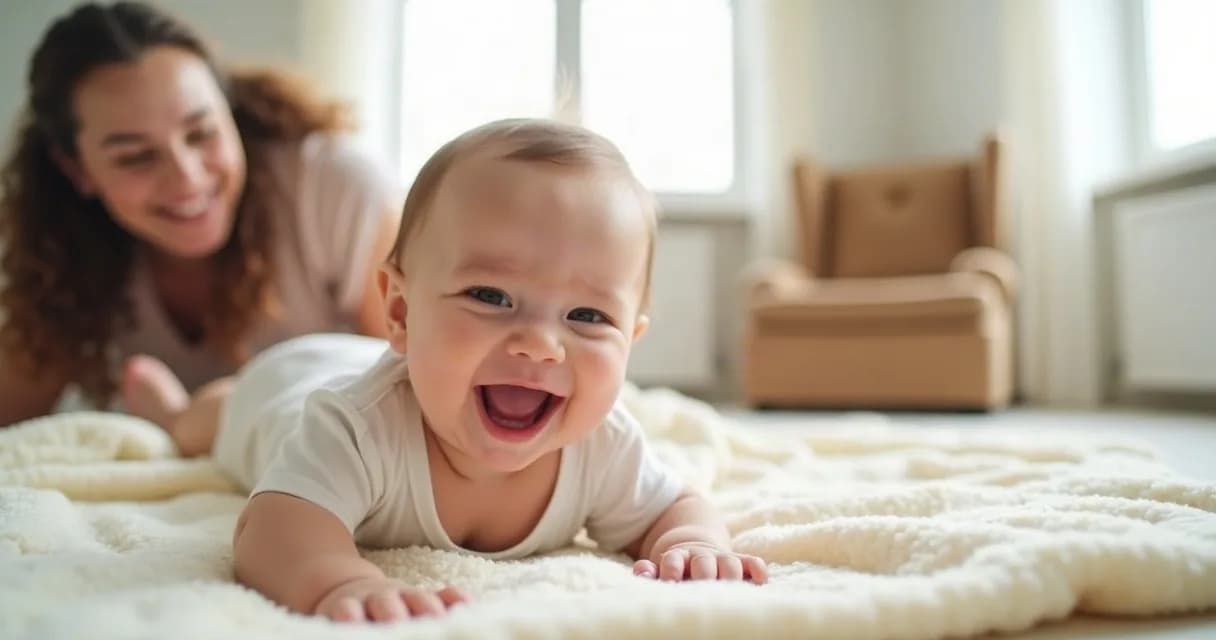
Most babies start laughing between 3 and 4 months, usually a few weeks after their first social smile. The CDC milestone checklist expects a chuckle by 4 months and real laughing by 6 months. Silly sounds, gentle tickles and peekaboo are the most reliable ways to get a giggle.
When do babies start laughing? For most babies, the first real laugh arrives between 3 and 4 months. It often comes as a surprise: one minute your baby is cooing, the next they let out a squeaky chuckle at a sneeze or a funny face, and the whole house stops to make them do it again.
This guide covers the laugh timeline month by month, what your baby understands when they laugh, 12 tried-and-true ways to get a giggle, how to catch that first laugh on camera, and when it is worth mentioning to your pediatrician.
When Do Babies Start Laughing? Month-by-Month Timeline
Laughing builds on smiling, cooing and watching faces. Here is the usual order, based on the CDC's developmental milestones and what pediatricians describe.
| Age | What you might notice |
|---|---|
| 0–6 weeks | Reflex smiles and sleep smiles, no social laughing yet |
| 6–8 weeks | First social smile at your face or voice |
| 2–3 months | Coos, gurgles, short squeals that sound almost like a laugh |
| 3–4 months | First real laugh or chuckle, often at sounds or tickles |
| 4–6 months | Belly laughs at games, faces and surprises |
| 6–9 months | Laughs at peekaboo, "I'm going to get you" games and other people laughing |
| 9–12 months | Laughs at things that are wrong or silly, and starts trying to make you laugh |
Every baby is different. Some laugh at 10 weeks, others wait until 5 months, and both can be completely normal.
Why Babies Laugh
Early laughs are mostly physical: a tickle, a raspberry on the tummy, a bouncy ride on your knee. Around 6 months, babies start laughing at surprises, because they now know what is supposed to happen and enjoy it when something unexpected does. By the end of the first year, babies laugh at "silly" things, like you wearing a sock on your hand, which shows they understand how the world normally works.
Laughing is also social. Babies laugh far more with familiar people than alone, and they often laugh because you are laughing. Every giggle is a small conversation.
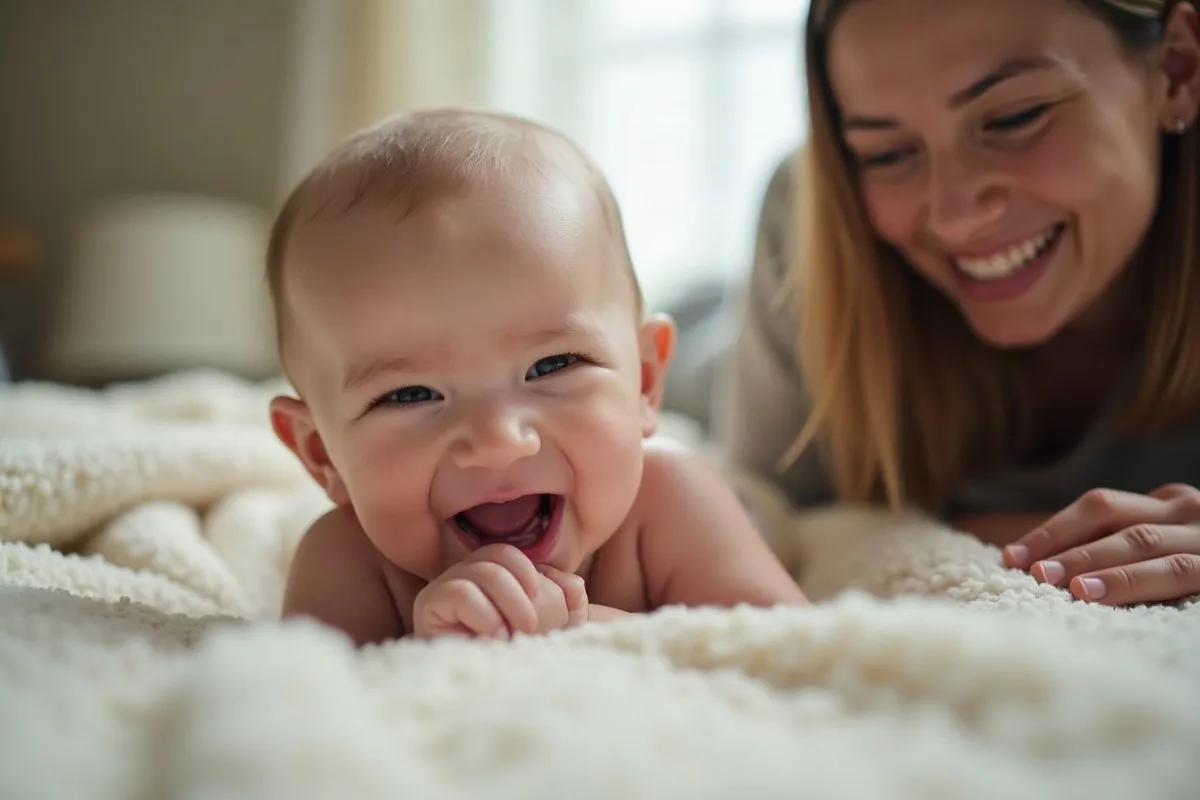
How to Make a Baby Laugh: 12 Ideas That Work
Babies find different things funny at different ages. Try a few and watch which ones land.
For 3 to 5 Months
- Silly sounds. Pops, clicks, animal noises and exaggerated "boing" sounds are the classic first laugh triggers.
- Raspberries. Blow gently on the tummy or the bottom of the feet.
- Gentle tickles. Light tickles on the neck, ribs and feet. Stop if your baby turns away or fusses.
- Your face up close. Wide eyes, puffed cheeks and slow, big expressions.
- Fake sneezes. A big "ah-ah-ah-choo" with a little head jerk is surprisingly reliable.
For 6 to 9 Months
- Peekaboo. Hide behind your hands, a blanket or a door. The bigger the reveal, the bigger the laugh.
- "I'm going to get you." Slowly creep your hands closer, then a gentle tickle.
- Bouncing on your knee. A slow "horsey ride" with a gentle dip at the end.
- Bubbles. Blow bubbles above your baby and pop them with a silly sound.
For 9 to 12 Months
- Wrong on purpose. Put a cup on your head or a sock on your hand.
- Copy your baby. Repeat their sounds and faces back to them.
- Pets and siblings. Older children and a calm family dog are often the best comedians in the house.
Never shake or toss a baby for laughs. Keep bouncing slow and supported, with your baby's head and neck held, and stop tickling as soon as your baby looks away or cries. Lots of tickling can tip into overstimulation fast.
How to Catch the First Laugh on Camera
Babies tend to laugh when they are fed, rested and alone with someone they love. That is also when nobody is holding a phone. A few tricks help:
- Keep the camera ready in the morning. Many babies are happiest in the first awake window after a good night.
- Film in video, then pull stills. Video catches the build-up and the laugh; you can screenshot the best frame later.
- Use window light. Turn off overhead lights and sit your baby facing a window. Our baby photo lighting guide covers exposure and focus.
- Ask a second person to film. You make the funny face, they record from just behind your shoulder so your baby looks toward the lens.
If you missed the moment, you still have options. Baby AI Photoshoot can turn a few everyday photos of your baby into studio-style portraits, and our AI baby video feature can animate a finished portrait with a Giggle motion: a laugh, then the smile stays. It is a lovely way to share a laughing clip with grandparents who live far away.
Turn everyday photos into laughing portraits
Upload a few phone photos and get studio-style baby portraits and short videos in minutes.
Create your photoshootWhat a Laugh Tells You About Development
A first laugh is a social milestone. It shows your baby can recognize you, read your expressions and share a feeling with you. It usually arrives in the same window as other 4-month milestones: holding the head steady, bringing hands to the mouth and pushing up on the forearms during tummy time. Our 3 month baby photoshoot ideas show easy ways to capture this stage.
You can also record the moment in your baby's milestone set. A free baby milestone card with "First laugh" and the date makes a sweet extra card between monthly photos.
When to Talk to Your Pediatrician
Laughing has a wide normal range, and one late milestone on its own rarely means anything. Still, mention it at your next checkup if:
- your baby is not smiling at people by about 3 months,
- your baby is not laughing, squealing or making happy sounds by about 6 months,
- your baby seems to have lost smiles, sounds or eye contact they used to have.
Your pediatrician will look at hearing, vision and the overall pattern of development, and can suggest early support if it is needed. Trust your instinct: you know your baby best.
Enjoy the Giggles
Most babies start laughing around 3 to 4 months, and from there it only gets better. Keep the silly sounds coming, try peekaboo once your baby is sitting up, and keep a phone nearby for the morning giggles. If you are curious about the step before laughing, our guide on the AI baby holding laugh meme is a funny detour, and our why is my baby crying during photoshoots guide helps when the giggles turn to tears mid-photo.