
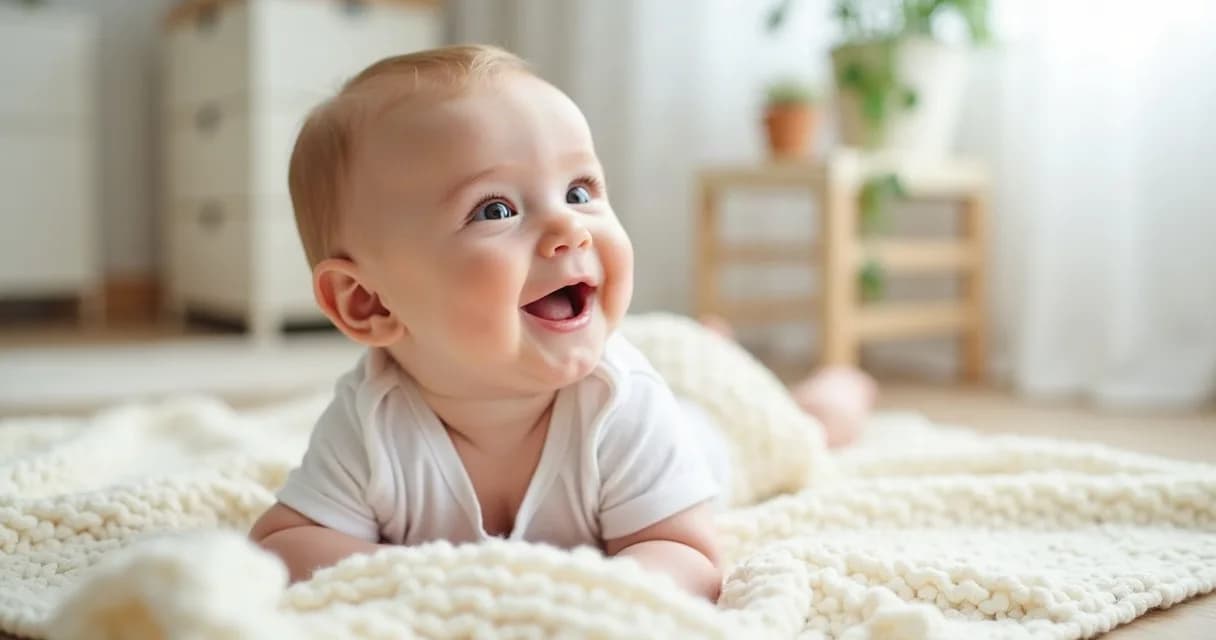
Babies start smiling socially, at your face or voice, between 6 and 8 weeks, and the CDC expects a smile in response to you by 2 months. Earlier smiles, often during sleep, are reflex smiles. Talk, sing and make eye contact during calm, alert moments to see the first smiles sooner.
When do babies start smiling? You'll probably see a smile in the first week, during a dream or a feed, but the first real social smile, the one meant for you, usually arrives between 6 and 8 weeks. For tired new parents, it is often the moment the whole newborn stage starts to feel worth it.
Here is what to expect week by week, how to tell a reflex smile from a social one, simple ways to encourage smiles, how to photograph them and when to mention it to your pediatrician.
When Do Babies Start Smiling? Week-by-Week Timeline
| Age | What you'll see |
|---|---|
| Birth–4 weeks | Reflex smiles, mostly in sleep or when drowsy |
| 4–6 weeks | Fleeting smiles while awake, sometimes after a feed |
| 6–8 weeks | First social smile in response to your face or voice |
| 2–3 months | Smiles to start a "conversation", smiles at familiar people |
| 3–4 months | Big gummy smiles, smiling with the whole body, first chuckles |
| 4–6 months | Smiles at their reflection, smiles and laughs during games |
Babies born early usually hit these milestones based on corrected age, counted from the due date.
Reflex Smile vs. Social Smile
Both are adorable, but only one is a response to you.
| Reflex smile | Social smile | |
|---|---|---|
| When | From birth, often in sleep | From about 6 weeks, while awake |
| Trigger | Sleep cycles, gas, drowsiness | Your face, voice or touch |
| Eyes | Often closed or unfocused | Looking at you, eyes crinkle |
| Length | A second or two | Longer, and they come back |
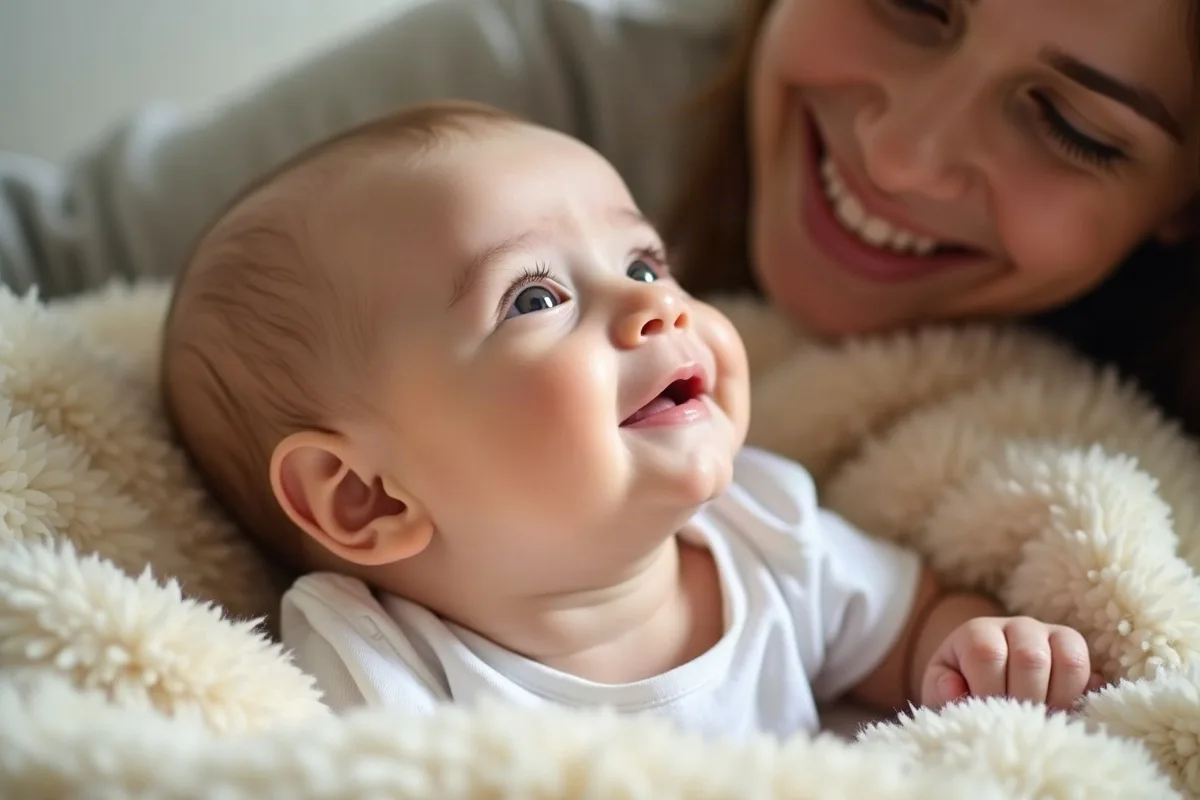
A simple test: smile and talk to your baby during a calm, alert moment. If they smile back, especially more than once, it's social.
Why the Social Smile Matters
The social smile is one of the first signs that your baby recognizes faces and connects them with comfort. It is also the start of turn-taking: you smile, they smile, you smile again. That back-and-forth builds the foundation for language and bonding long before the first word.
How to Encourage Your Baby's Smiles
Babies smile most when they are fed, comfortable and alert. Try these during those windows.
- Face-to-face time. Hold your baby about 8 to 12 inches from your face, the distance newborns see best.
- Talk in a sing-song voice. High, slow, exaggerated "parentese" gets more attention than normal speech.
- Smile first, then wait. Give your baby a few seconds to respond. Young babies need time.
- Copy their expressions. When they coo or smile, do it back.
- Gentle touch. Stroke their cheek or tummy while you talk.
- Songs with motions. Simple songs with hand movements hold attention.
- Limit distractions. Turn off the TV and put the phone down; your face is the best toy.
How to Photograph Your Baby's First Smiles
First smiles are quick, so set yourself up in advance.
- Use burst mode or video. Hold the shutter or record and pull the best frame later.
- Shoot near a window. Soft daylight from the side shows dimples and crinkled eyes. Our baby photo lighting guide covers the details.
- Get to eye level. Lie down next to your baby rather than shooting from above.
- Ask a helper. One person makes the faces, the other films from just behind them.
If the perfect smile never quite makes it onto your phone, Baby AI Photoshoot can turn a few everyday photos of your baby into studio-style portraits in about two minutes each. You can also animate a finished portrait into an AI baby video with a Smile motion, where the smile slowly arrives, which makes a lovely clip for grandparents.
Turn everyday photos into smiling portraits
Upload a few phone photos and get studio-style baby portraits and short smile videos in minutes.
Create your photoshootRecord the Milestone
Write down the date of the first social smile; it is easy to forget in the blur of the newborn weeks. A free baby milestone card with "First smile" and the date makes a sweet photo prop, and our monthly baby milestone photo ideas show how to keep the whole first year consistent. For old or blurry phone photos, our free baby photo enhancer sharpens faces and restores detail.
Smiles and Bonding: What Parents Often Ask
Does my baby smile more at mom? Many babies smile first at the person who feeds and holds them most, but within weeks they smile at any familiar, responsive face. Dads, grandparents and siblings all get their turn.
Why does my baby smile at the ceiling fan? Young babies love high contrast, movement and light. Smiling at a fan, a lamp or a black-and-white card is normal and shows their vision is developing.
Why did my baby stop smiling for a few days? Growth spurts, colds, vaccinations and poor sleep can all make babies less smiley for a day or two. A steady drop over weeks is the thing to mention to your doctor.
Can I "teach" my baby to smile? You can't speed it up much, but you can give your baby lots of chances: face-to-face time, talking, singing and waiting for a response all help babies practise.
When to Talk to Your Pediatrician
There is a range of normal, and most babies who seem "late" catch up quickly. Mention it at your next checkup if:
- your baby isn't smiling at people by about 3 months,
- your baby rarely makes eye contact or doesn't seem to follow faces,
- your baby used to smile and has stopped.
Your pediatrician may check vision and hearing and look at the overall pattern. Asking early is never an overreaction.
What Comes After the First Smile
Once smiling starts, laughing usually follows within a month or two, often around 3 to 4 months. Our guide on when babies start laughing covers the next milestone, and our newborn photos guide explains which photos to take in these early weeks. Enjoy the smiles: they get bigger every week.